L-tryptophan benefits: sleep, mood and NAD+, plus the safety history you should know

L-tryptophan is the amino acid people blame for post-Thanksgiving sleepiness, and it shows up in sleep aids, mood supplements and NAD+ formulas. It does several important jobs in the body. Whether a supplement adds anything depends on the goal, the dose and your medications.
What L-tryptophan is
L-tryptophan is one of the nine essential amino acids: your body can’t make it, so it must come from food. Good sources include turkey and chicken, eggs, dairy, fish, soy, nuts and seeds. Most people get roughly a gram a day from a normal diet.
Your body uses it to make:
- Proteins, like any amino acid.
- Serotonin, via 5-HTP. Serotonin influences mood, appetite and digestion.
- Melatonin, made from serotonin, which helps regulate your sleep cycle.
- NAD+, through the kynurenine pathway.
L-tryptophan benefits: what the evidence says
| Use | Evidence | Typical studied dose |
|---|---|---|
| Falling asleep faster | Some small studies, mixed results | 1 to 2 g before bed |
| Mood and mild low mood | Limited; not a replacement for treatment | Varies |
| PMS-related mood symptoms (PMDD) | Small studies | Up to 6 g/day, under supervision |
| NAD+ production | Real pathway, but inefficient | Not studied as a NAD+ booster |
Sleep. The best-supported use. Some studies found that a gram or more before bed helps people fall asleep a bit faster, but the effect is modest and not consistent.
Mood. Because tryptophan is the raw material for serotonin, it has been studied for low mood. The evidence is limited, and it should not replace treatment for depression.
NAD+. Your liver can turn tryptophan into NAD+, but it is inefficient: about 60 mg of tryptophan produces roughly 1 mg of niacin equivalent. That is why NAD+ supplements rely on vitamin B3 forms such as niacinamide. For the full pathway, see what NAD+ is.
The 1989 EMS outbreak
In 1989, more than 1,500 people in the US developed eosinophilia-myalgia syndrome (EMS), a serious condition causing severe muscle pain, and 37 died. It was linked to L-tryptophan supplements, most likely due to impurities from one manufacturer’s production process. L-tryptophan was recalled in 1990 and returned to the market later under the 1994 supplement law.
Since then, serious cases have been rare, but the lesson stands: buy L-tryptophan from reputable brands with third-party testing.
Side effects and interactions
Possible side effects include heartburn, stomach pain, nausea, belching, drowsiness, dizziness and headache.
Talk to your doctor before taking L-tryptophan if you:
- Take antidepressants (SSRIs, SNRIs, MAO inhibitors, tricyclics), triptans, tramadol, meperidine or dextromethorphan. Together they can raise serotonin too much, leading to serotonin syndrome.
- Take sedatives or use St. John’s wort, 5-HTP or kava.
- Are pregnant, when it is considered likely unsafe, or breastfeeding.
- Have liver or kidney disease.
L-tryptophan in NAD+ formulas
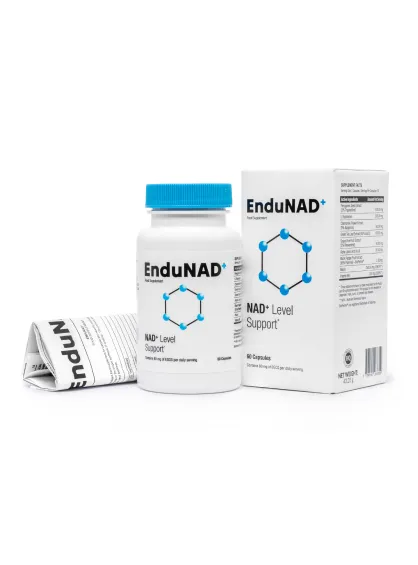
Some NAD+ supplements add a small amount of L-tryptophan for its role in the kynurenine pathway. EnduNAD, for example, contains 200 mg per daily serving. That is modest compared with the roughly 1 gram you get from food and far below sleep-study doses, but it still counts if you take antidepressants: check with your doctor first.
How much tryptophan you get from food
Most people already get a good amount of tryptophan without supplements. Approximate amounts per typical serving:
| Food | Serving | Tryptophan (approx.) |
|---|---|---|
| Turkey or chicken breast | 3 oz | 250 to 300 mg |
| Salmon or tuna | 3 oz | 250 to 300 mg |
| Pumpkin seeds | 1 oz | about 150 mg |
| Milk | 1 cup | about 100 mg |
| Cheddar cheese | 1 oz | about 90 mg |
| Egg | 1 large | about 80 mg |
The famous turkey effect is mostly a myth: turkey doesn’t contain much more tryptophan than other poultry. The sleepiness after a big holiday meal is more likely due to the amount of food, carbohydrates and alcohol.
L-tryptophan vs 5-HTP vs melatonin
These three are often confused because they sit on the same pathway: tryptophan becomes 5-HTP, which becomes serotonin, which becomes melatonin. For sleep, melatonin has the most direct evidence and works at small doses. 5-HTP skips one step and acts faster on serotonin, which also makes interactions with antidepressants more likely. L-tryptophan is the furthest upstream and the gentlest, but also the least targeted.
The bottom line
L-tryptophan is essential and does a lot in the body, but as a supplement its benefits are modest: a possible sleep aid at gram doses, limited mood evidence, and an inefficient route to NAD+. Respect the interactions. For NAD+ specifically, vitamin B3 does the heavy lifting; see niacinamide vs niacin.
Frequently asked questions
What does L-tryptophan do?
L-tryptophan is an essential amino acid your body uses to build proteins, the mood-related messenger serotonin, the sleep hormone melatonin, and NAD+. You have to get it from food or supplements because your body cannot make it.
Does L-tryptophan help you sleep?
Some studies suggest it can shorten the time it takes to fall asleep, mostly at doses of 1 gram or more taken before bed. Results are mixed and the effect is modest. Melatonin and good sleep habits have stronger evidence.
Is L-tryptophan safe?
At normal doses it is generally well tolerated, with possible nausea, heartburn and drowsiness. In 1989, contaminated supplements caused an outbreak of eosinophilia-myalgia syndrome, so buy from reputable brands. Avoid it in pregnancy and check with your doctor if you take antidepressants.
Can I take L-tryptophan with antidepressants?
Not without your doctor's approval. L-tryptophan raises serotonin, and combining it with SSRIs, MAO inhibitors, triptans, tramadol or St. John's wort can increase the risk of serotonin syndrome.
How does L-tryptophan relate to NAD+?
Your body can turn tryptophan into NAD+ through the kynurenine pathway. It is inefficient: about 60 mg of tryptophan yields roughly 1 mg of niacin equivalent. That is why vitamin B3 forms are the main NAD+ precursors in supplements.
Sources
Read next
Best NAD supplement in 2026: honest picks by goal (and the label problem most lists ignore)
The best NAD supplement depends on your goal and budget. Honest picks for NR, combination and niacinamide formulas, plus why most NAD+ labels fail lab tests.

EGCG benefits: what green tea's key compound can and can't do
EGCG benefits explained: what green tea's main catechin does for metabolism, heart and cells, what the evidence shows, and the 800 mg liver safety threshold.

Menopause fatigue: why you're so tired, and what actually helps
Menopause fatigue is common, but it isn't always hormones. The main causes, which tests to ask your doctor for, and what helps, including where supplements fit.
EnduNAD review
Ingredients, doses, what to realistically expect and who should skip it.
This page is general information, not medical advice. If you take medication, are pregnant or have ongoing symptoms, talk to your doctor first. These statements have not been evaluated by the Food and Drug Administration. This product is not intended to diagnose, treat, cure, or prevent any disease.