Niacinamide vs niacin: what's the difference, and which one do you need?

If you are comparing niacinamide vs niacin, you have probably noticed that labels make it confusing. A US Supplement Facts panel often just says “Niacin”, with the actual form in small print: “(as niacinamide)” or “(as nicotinic acid)”. Those two forms behave very differently, so the bracket matters more than the headline. (Nicotinamide, by the way, is just another name for niacinamide: see nicotinamide vs niacinamide.)
Niacinamide vs niacin at a glance
| Niacin (nicotinic acid) | Niacinamide (nicotinamide) | |
|---|---|---|
| Vitamin B3? | Yes | Yes |
| Precursor for NAD+ | Yes | Yes |
| Causes flushing | Yes, from about 30 to 50 mg | No |
| Affects cholesterol | Yes, at 1,000 mg+ (prescription doses) | No |
| Typical supplement dose | 50 to 500 mg | 250 to 500 mg |
| Main side-effect risks | Flushing, stomach upset, liver damage at high doses | Stomach upset, liver effects in the gram range |
| Common use | Former cholesterol treatment | NAD+ supplements, skin health |
Both forms count toward the same daily needs: 16 mg a day for adult men and 14 mg for women. Most Americans already get that from meat, fish, whole grains and fortified foods.
The one chemical difference
Niacin and niacinamide share the same ring structure. Niacin has an acid group attached; niacinamide has an amide group in the same spot. That swap decides which receptors the molecule can switch on.
Niacin activates a receptor called GPR109A on skin immune cells. That triggers prostaglandins, which widen small blood vessels near the skin surface. The result is the niacin flush: warm, red, tingling or itchy skin on the face, neck and chest, usually within 15 to 30 minutes, fading within an hour or two. It is unpleasant but generally harmless.
Niacinamide does not activate that receptor, so it does not flush. The same receptor also explains niacin’s effect on blood fats, which is why niacinamide has no cholesterol effect either.
Niacin and cholesterol: what changed
For decades, high-dose niacin (1 to 3 grams a day, usually prescription extended-release) was used to raise HDL and lower LDL and triglycerides. It does move those numbers.
The problem is outcomes. Two large trials, AIM-HIGH (2011) and HPS2-THRIVE (2014), added niacin to statin therapy in people with heart disease. Neither found fewer heart attacks or strokes, and HPS2-THRIVE found more serious side effects, including bleeding, infections and new diabetes. Since then niacin has mostly dropped out of cholesterol treatment. If your doctor prescribed it, follow their advice. Don’t self-treat cholesterol with over-the-counter niacin.
Niacinamide and NAD+
Your body converts both forms into NAD+, the molecule cells need to turn food into energy. For a NAD+ supplement, niacinamide is the practical choice: you can take a few hundred milligrams without flushing.
Two honest caveats:
- It is not the best-studied NAD+ booster. Nicotinamide riboside (NR) and NMN have more human trials showing they raise NAD+ in blood. Niacinamide is cheaper and has the longest safety record.
- More is not always better. In cell studies, very high niacinamide concentrations can inhibit sirtuins, the enzymes NAD+ boosters are supposed to support. Whether that matters at normal supplement doses in people is unknown.
Niacinamide also has its own research track in skin health. In the ONTRAC trial, 500 mg twice a day reduced new non-melanoma skin cancers by 23% in people with a history of them. That is a specific high-risk group, not a reason for everyone to take it.
Which one should you take?
- For cholesterol: neither on your own. This is a decision for your doctor.
- For a NAD+ or energy supplement: niacinamide, or NR if you want the most direct NAD+ data and accept the higher price.
- For your skin: topical niacinamide in a serum or moisturizer. Oral doses are only studied for specific conditions.
- For basic B3 needs: neither. Food covers it for most people, and a multivitamin is enough if your diet is limited.
Watch out for “no-flush niacin”. It usually contains inositol hexanicotinate, not niacinamide. It doesn’t flush because very little free nicotinic acid is released, which also means you get little of niacin’s effect.
Safety and upper limits
The US upper limit for supplemental niacin is 35 mg a day for adults, and it applies to both forms. It was set mainly to prevent flushing from nicotinic acid, which is why many niacinamide products go well above it. Studies have generally found niacinamide well tolerated at doses like 500 mg twice a day, with liver problems mostly reported in the gram range. Extended-release nicotinic acid carries the highest liver risk.
Talk to your doctor before taking either form above 35 mg a day long term, especially if you have liver disease, diabetes, gout or stomach ulcers, take blood thinners or statins, or are pregnant.
How this applies to EnduNAD
EnduNAD, the NAD+ supplement we review on this site, uses 250 mg of niacinamide per daily serving. That means no niacin flush, so you can take it every day without the red, itchy skin, and it supports normal energy metabolism. It also means the dose is above the 35 mg upper limit, which is common for NAD+ products, so check with your doctor if you take medication. Read our EnduNAD review for the full ingredient list, or our guide to NAD supplements for how niacinamide compares with NR and NMN.
Frequently asked questions
Is niacinamide the same as niacin?
No. Both are forms of vitamin B3 and both count toward your daily niacin intake, but they are different molecules. Niacin (nicotinic acid) can cause flushing and changes blood lipids at high doses. Niacinamide (nicotinamide) does neither. Supplement labels often list both simply as niacin, so check the form in brackets.
Does niacinamide lower cholesterol?
No. Only nicotinic acid affects cholesterol and triglycerides, and only at prescription-level doses of 1,000 mg or more a day. Large trials found that adding niacin to statin therapy did not reduce heart attacks or strokes and caused more side effects, so it is rarely used for this anymore.
Which is better for NAD+: niacin or niacinamide?
Both are NAD+ precursors. Niacinamide is used more often in NAD+ supplements because it does not cause flushing at higher doses. Nicotinamide riboside and NMN are other precursors with more human data specifically on raising NAD+ levels, but they cost considerably more.
Is no-flush niacin the same as niacinamide?
Usually not. Products sold as no-flush or flush-free niacin often contain inositol hexanicotinate, which releases little free nicotinic acid in the body. That is why it does not flush, but it also means it has little of niacin's effect on lipids. Check the label for the exact form.
How much niacinamide is safe per day?
The US upper limit for supplemental niacin is 35 mg a day for adults, set mainly to prevent flushing from nicotinic acid. Niacinamide is generally well tolerated in studies at much higher doses, such as 500 mg twice a day, but doses in the grams can affect the liver. If you take more than the upper limit long term, tell your doctor.
Sources
- NIH Office of Dietary Supplements: Niacin fact sheet for health professionals
- Kamanna et al. (2009). The mechanism and mitigation of niacin-induced flushing. Int J Clin Pract.
- HPS2-THRIVE Collaborative Group (2014). Effects of extended-release niacin with laropiprant in high-risk patients. NEJM.
- AIM-HIGH Investigators (2011). Niacin in patients with low HDL cholesterol levels receiving intensive statin therapy. NEJM.
- Chen et al. (2015). A phase 3 randomized trial of nicotinamide for skin-cancer chemoprevention (ONTRAC). NEJM.
- Hwang and Song (2020). Possible adverse effects of high-dose nicotinamide: mechanisms and safety assessment. Biomolecules.
Read next
Best NAD supplement in 2026: honest picks by goal (and the label problem most lists ignore)
The best NAD supplement depends on your goal and budget. Honest picks for NR, combination and niacinamide formulas, plus why most NAD+ labels fail lab tests.

EGCG benefits: what green tea's key compound can and can't do
EGCG benefits explained: what green tea's main catechin does for metabolism, heart and cells, what the evidence shows, and the 800 mg liver safety threshold.

L-tryptophan benefits: sleep, mood and NAD+, plus the safety history you should know
L-tryptophan benefits for sleep, mood and NAD+ production, what the evidence shows, food sources, doses, the 1989 EMS outbreak and drug interactions.
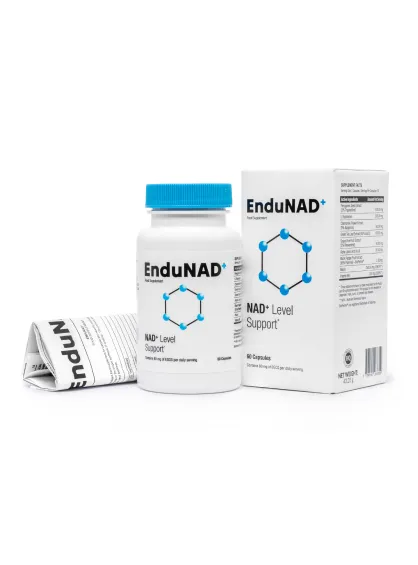
EnduNAD review
Ingredients, doses, what to realistically expect and who should skip it.
This page is general information, not medical advice. If you take medication, are pregnant or have ongoing symptoms, talk to your doctor first. These statements have not been evaluated by the Food and Drug Administration. This product is not intended to diagnose, treat, cure, or prevent any disease.