What is NAD+? What it does, why it drops, and how to support it

If you have seen NAD+ IV drips, patches and capsules everywhere lately and wondered what NAD+ actually is, here is the plain version. NAD+ is not a vitamin or a hormone. It is a helper molecule, a coenzyme, that hundreds of enzymes in your body need in order to work. Without it, you could not turn a single meal into energy.
What NAD+ does in your body
NAD+ has two main jobs.
1. Energy production. When your cells break down glucose and fat, NAD+ picks up electrons and becomes NADH. NADH then delivers those electrons to your mitochondria, the power plants of the cell, which use them to make ATP, the energy currency your muscles, brain and heart run on. NADH hands off the electrons, turns back into NAD+, and the cycle repeats thousands of times a second.
2. Fuel for repair and signaling enzymes. Some enzymes don’t just borrow NAD+, they consume it:
- PARPs help repair damaged DNA.
- Sirtuins regulate metabolism, inflammation and how cells respond to stress. They are the reason NAD+ became famous in aging research.
- CD38 is an immune-related enzyme that breaks down NAD+ and becomes more active with inflammation.
Because these enzymes use NAD+ up, your body has to keep rebuilding it.
How your body makes NAD+
You don’t need to eat NAD+ itself. Your body makes it through three routes:
| Route | Starting material | Where it comes from |
|---|---|---|
| Salvage pathway (main route) | Niacinamide (nicotinamide) | Food, supplements, and NAD+ your own cells used up |
| Preiss-Handler pathway | Niacin (nicotinic acid) | Food and supplements |
| De novo pathway | Tryptophan | Protein in your diet |
Nicotinamide riboside (NR) and NMN enter the salvage pathway further along, which is why they are marketed as more direct NAD+ boosters. For how these names relate, see our B3 name decoder.
Most of your daily NAD+ comes from recycling: when sirtuins or PARPs use NAD+, they release nicotinamide, which your cells turn back into NAD+.
Does NAD+ really decline with age?
This is the claim behind most NAD+ marketing, so it is worth being precise.
- In animals: yes. Mice and worms show clear NAD+ declines with age, and raising NAD+ improved several markers of aging in those studies.
- In humans: partly. Some studies find lower NAD+ in the skin, brain, muscle or blood of older people. But a 2021 review in Nutrients concluded that the age-related decline in humans has only been measured consistently in a limited number of studies, with large differences between tissues.
So when a product claims NAD+ drops by “50%” or “65%” by a certain age, ask for the source. Those figures usually come from one tissue, one small study, or animal data.
Things that are more clearly linked to lower NAD+ include chronic inflammation, obesity, high alcohol intake and some diseases. Exercise is one of the few things consistently linked to higher NAD+ in muscle.
Can you raise your NAD+ levels?
Yes, at least in blood. Several precursors do this reliably in human trials:
- Nicotinamide riboside (NR): 1,000 mg a day raised blood NAD+ by roughly 60% in healthy middle-aged and older adults.
- NMN: similar increases in several smaller trials.
- Niacinamide and niacin: both raise NAD+ and are far cheaper, but have been studied less specifically for this.
The open question is what happens next. A 2025 review in Nature Metabolism found that raising NAD+ in humans has so far produced limited effects on health outcomes such as muscle function, blood pressure or insulin sensitivity. The research is active, but the big promises are still ahead of the evidence.
NAD+ supplements, IVs and patches
Because swallowed NAD+ is largely broken down in the gut, most supplements use precursors instead. Clinics also offer NAD+ IV drips and injections, which are expensive and have very little published evidence behind them. Patches and nasal sprays have even less. We compare the options in our guide to NAD supplements.
NAD+ vs NADH: the two forms
You will also see NADH on supplement labels. NAD+ and NADH are the same molecule in two states. NAD+ is “empty” and ready to accept electrons from the food you break down; NADH is “loaded” and carries those electrons to your mitochondria. Your cells constantly switch between the two, and the balance between them (the NAD+/NADH ratio) is itself an important signal of your metabolic state.
NADH supplements have been sold for decades, often for fatigue. The human evidence for them is small and older, and like NAD+ itself, swallowed NADH faces the problem of being broken down in the gut. Most modern NAD+ products therefore focus on precursors instead.
The practical takeaway
- A varied diet already gives most people enough B3 to make NAD+.
- Exercise, enough sleep, less alcohol and managing inflammation support your NAD+ system without a supplement.
- If you want to try a supplement, choose one with a clearly dosed precursor and realistic claims. Niacin supports normal energy metabolism, which is the solid, well-established part.*
EnduNAD, the formula we review on this site, is built on 250 mg niacinamide, the salvage-pathway precursor, plus B6 and plant extracts. Read our EnduNAD review before you decide.
*These statements have not been evaluated by the Food and Drug Administration. This product is not intended to diagnose, treat, cure, or prevent any disease.
Frequently asked questions
What does NAD stand for?
NAD stands for nicotinamide adenine dinucleotide. NAD+ is its oxidized form and NADH its reduced form. Together they shuttle electrons in the reactions that turn food into usable energy in your cells.
What is the difference between NAD and NAD+?
In everyday use, NAD and NAD+ mean the same molecule. Strictly speaking, NAD is the general name and NAD+ is the form that accepts electrons. When it picks them up, it becomes NADH.
Do NAD+ levels really decline with age?
In animals, NAD+ clearly declines with age. In humans, the evidence is thinner: several studies show lower levels in some tissues of older people, but a 2021 review found the decline has been measured consistently in only a limited number of human studies, and it varies by tissue.
Can you get NAD+ from food?
Not directly in a useful way. Your body makes NAD+ from vitamin B3 (niacin and niacinamide), from the amino acid tryptophan, and from precursors such as nicotinamide riboside. Meat, fish, poultry, whole grains and fortified foods supply these building blocks.
Should I take a NAD+ supplement?
If you eat a varied diet, you already get enough vitamin B3 to make NAD+. Supplements with precursors such as niacinamide, NR or NMN can raise NAD+ in blood, but clear health benefits in healthy people have not been proven yet. Talk to your doctor if you take medication.
Sources
- Vinten et al. (2025). NAD+ precursor supplementation in human ageing: clinical evidence and challenges. Nature Metabolism.
- Peluso et al. (2021). Age-Dependent Decline of NAD+: Universal Truth or Confounded Consensus? Nutrients.
- NIH Office of Dietary Supplements: Niacin fact sheet for health professionals
- Martens et al. (2018). Chronic nicotinamide riboside supplementation is well-tolerated and elevates NAD+ in healthy middle-aged and older adults. Nature Communications.
- Cleveland Clinic: NAD+ supplements, benefits and risks
Read next
Best NAD supplement in 2026: honest picks by goal (and the label problem most lists ignore)
The best NAD supplement depends on your goal and budget. Honest picks for NR, combination and niacinamide formulas, plus why most NAD+ labels fail lab tests.

EGCG benefits: what green tea's key compound can and can't do
EGCG benefits explained: what green tea's main catechin does for metabolism, heart and cells, what the evidence shows, and the 800 mg liver safety threshold.

L-tryptophan benefits: sleep, mood and NAD+, plus the safety history you should know
L-tryptophan benefits for sleep, mood and NAD+ production, what the evidence shows, food sources, doses, the 1989 EMS outbreak and drug interactions.
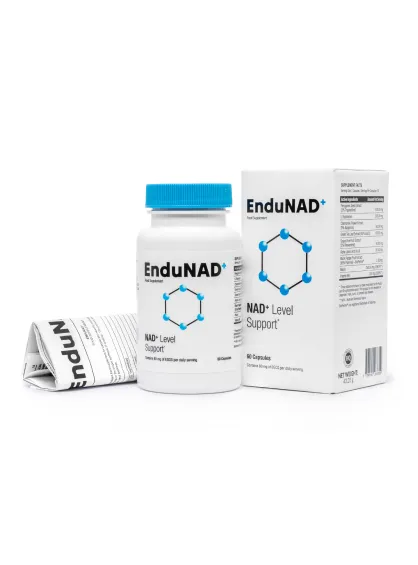
EnduNAD review
Ingredients, doses, what to realistically expect and who should skip it.
This page is general information, not medical advice. If you take medication, are pregnant or have ongoing symptoms, talk to your doctor first. These statements have not been evaluated by the Food and Drug Administration. This product is not intended to diagnose, treat, cure, or prevent any disease.