Nicotinamide vs niacinamide: same molecule, different name (and the names that really differ)

If you landed here comparing nicotinamide vs niacinamide, you are not alone: almost 2,000 Americans search for exactly that every month. The confusion makes sense. Supplement labels, skincare packaging and scientific papers all use different names for B3 compounds, and some of those names look almost identical while meaning something different.
Why one molecule has two names
When vitamin B3 was identified, its chemical names were nicotinic acid and nicotinamide. In the 1940s, when B3 was added to fortified flour and bread in the US, those names were considered a problem because they sounded like nicotine. “Niacin” was coined as a friendlier name for nicotinic acid, and “niacinamide” followed for nicotinamide.
The result is a split that still exists today:
- United States: “niacinamide” on most supplement facts panels and skincare labels, often written as “Niacin (as niacinamide)”.
- Research and medicine: “nicotinamide”, sometimes abbreviated as NAM.
- Europe, Australia and elsewhere: usually “nicotinamide” on labels.
None of these compounds contains nicotine or has anything to do with tobacco.
The B3 name decoder
This is where the real differences are. The table covers the names you will meet on NAD+ and vitamin products.
| Name on the label | What it is | Same as niacinamide? |
|---|---|---|
| Niacinamide | Amide form of vitamin B3 | Yes |
| Nicotinamide, NAM | Amide form of vitamin B3 | Yes |
| Niacin (as niacinamide) | US labeling of niacinamide | Yes |
| Niacin, nicotinic acid | Acid form of vitamin B3; causes flushing | No |
| Inositol hexanicotinate (“no-flush niacin”) | Nicotinic acid bound to inositol | No |
| Nicotinamide riboside (NR) | Nicotinamide bound to ribose | No |
| NMN (nicotinamide mononucleotide) | NR with a phosphate group | No |
| NAD+ | The coenzyme all of the above help build | No |
The trap is the word “nicotinamide” inside NR and NMN. Those are larger molecules with their own research, and they cost many times more per gram than plain niacinamide. For how niacin itself differs, see our guide to niacinamide vs niacin.
What nicotinamide does in the body
Whatever you call it, nicotinamide is one of the main building blocks your body recycles into NAD+, the coenzyme every cell needs to turn food into energy. It is also the form your cells release when NAD+ is used up, so it sits at the center of the NAD+ “salvage” loop.
That is why it shows up in three very different places:
- NAD+ supplements. Niacinamide is the most affordable NAD+ precursor and does not cause flushing. NR and NMN have more human trials on raising NAD+ levels, but cost far more.
- Skin cancer prevention. In the ONTRAC trial, 500 mg of nicotinamide twice a day lowered new non-melanoma skin cancers by 23% in people who had had at least two before. Dermatologists may recommend it for that high-risk group.
- Glaucoma research. Trials are testing high doses (1.5 to 3 grams a day) to protect the optic nerve. It is not an approved treatment, and the American Academy of Ophthalmology advises against trying this outside a study.
Topically, niacinamide is also one of the most used skincare ingredients, for oil control, redness and the skin barrier. Creams and serums don’t count toward your B3 intake.
Dose and safety
Because nicotinamide and niacinamide are identical, the safety data applies to both names:
- Upper limit: 35 mg a day of supplemental niacin for US adults, covering all forms. It was set to prevent flushing from nicotinic acid, which nicotinamide doesn’t cause, so many products go above it.
- Typical medical doses: 500 to 1,500 mg a day is generally well tolerated under a doctor’s supervision. The most common complaint is an upset stomach.
- High doses: 3 grams a day or more can cause liver damage, nausea and headaches. Those doses belong in clinical trials, with liver monitoring.
- Avoid it if you have liver disease, and check with your doctor if you take other medication or are pregnant.
How to read a label in 10 seconds
- Find the B3 line. On US labels it usually says “Niacin”. Look at the form in brackets.
- “as niacinamide” or “as nicotinamide” means the amide form: no flush.
- “as nicotinic acid” or no form listed usually means niacin: expect flushing above about 30 mg.
- “Nicotinamide riboside” or “NMN” in the ingredient list are different precursors, often listed separately from the vitamin B3 line.
- Compare the milligrams, not the name. 250 mg of niacinamide is the same as 250 mg of nicotinamide.
The bottom line
Nicotinamide and niacinamide are the same thing, so choose by dose, price and quality, never by the name. EnduNAD, for example, lists its 250 mg as niacin from niacinamide, the flush-free amide form. Our EnduNAD review covers the full formula, and our guide to NAD supplements explains how niacinamide stacks up against NR and NMN.
Frequently asked questions
Is nicotinamide the same as niacinamide?
Yes. Nicotinamide and niacinamide are two names for exactly the same molecule, the amide form of vitamin B3. Niacinamide is the name used on most US supplement and skincare labels; nicotinamide is the name used in research, medicine and most other countries.
Is nicotinamide stronger than niacinamide?
No. Because they are the same compound, 500 mg of nicotinamide is identical to 500 mg of niacinamide. Differences between products come from the dose, the other ingredients and the quality of manufacturing, not from the name on the label.
Is nicotinamide riboside the same as nicotinamide?
No. Nicotinamide riboside (NR) is nicotinamide bound to a sugar called ribose. It is a different NAD+ precursor with its own research and a much higher price. NMN (nicotinamide mononucleotide) is another step further: NR with a phosphate group attached.
Does nicotinamide cause flushing?
No. Flushing is caused by niacin (nicotinic acid), not by nicotinamide or niacinamide. If a product causes flushing, check the label: it probably contains nicotinic acid, listed as niacin.
How much nicotinamide can you take safely?
The US upper limit for supplemental niacin, 35 mg a day, technically covers nicotinamide too. In medical use, 500 to 1,500 mg a day is generally well tolerated under a doctor's supervision. Doses of 3 grams or more can damage the liver and should only be taken in clinical trials. Don't take it at all if you have liver disease.
Sources
- NIH Office of Dietary Supplements: Niacin fact sheet for health professionals
- American Academy of Ophthalmology (2025). Nicotinamide safety concerns.
- Chen et al. (2015). A phase 3 randomized trial of nicotinamide for skin-cancer chemoprevention (ONTRAC). NEJM.
- Hwang and Song (2020). Possible adverse effects of high-dose nicotinamide: mechanisms and safety assessment. Biomolecules.
- Vinten et al. (2025). NAD+ precursor supplementation in human ageing: clinical evidence and challenges. Nature Metabolism.
Read next

Best NAD supplement in 2026: honest picks by goal (and the label problem most lists ignore)
The best NAD supplement depends on your goal and budget. Honest picks for NR, combination and niacinamide formulas, plus why most NAD+ labels fail lab tests.

EGCG benefits: what green tea's key compound can and can't do
EGCG benefits explained: what green tea's main catechin does for metabolism, heart and cells, what the evidence shows, and the 800 mg liver safety threshold.

L-tryptophan benefits: sleep, mood and NAD+, plus the safety history you should know
L-tryptophan benefits for sleep, mood and NAD+ production, what the evidence shows, food sources, doses, the 1989 EMS outbreak and drug interactions.
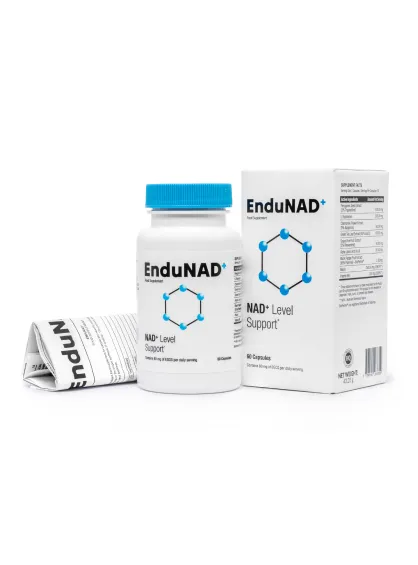
EnduNAD review
Ingredients, doses, what to realistically expect and who should skip it.
This page is general information, not medical advice. If you take medication, are pregnant or have ongoing symptoms, talk to your doctor first. These statements have not been evaluated by the Food and Drug Administration. This product is not intended to diagnose, treat, cure, or prevent any disease.