NAD+ benefits: what's proven, what's promising, and what's hype

Search for NAD+ benefits and you’ll find lists promising more energy, sharper thinking, younger skin, weight loss and a longer life. Some of those claims have a scientific basis; many stretch far beyond it. Here is what the evidence supports, graded from proven to hype.
What NAD+ does (proven)
These aren’t supplement claims, they are basic biology:
- Energy metabolism: NAD+ carries electrons in the reactions that turn glucose and fat into ATP, your cells’ energy.
- DNA repair: PARP enzymes use NAD+ to repair damaged DNA.
- Cell signaling: sirtuins use NAD+ to regulate metabolism and stress responses.
Niacin, which your body uses to build NAD+, supports normal energy metabolism.* That part is well established. For background, read what NAD+ is.
NAD+ benefits graded by evidence
| Claimed benefit | Human evidence | Grade |
|---|---|---|
| Raises NAD+ levels in blood | Consistent across NR and NMN trials | Proven |
| Supports normal energy metabolism (via niacin) | Established nutrient function | Proven |
| Lower risk of new non-melanoma skin cancers (nicotinamide, high-risk people) | One large trial | Promising, specific group |
| Insulin sensitivity | One positive NMN trial in prediabetic women; others mixed | Promising |
| Blood pressure, arterial stiffness | Small trials, trends | Uncertain |
| Muscle strength and endurance in older adults | Mixed results | Uncertain |
| More energy in healthy people | Little evidence | Unproven |
| Brain health and memory | Mostly animal and early studies | Unproven |
| Weight loss | Little human evidence | Unproven |
| Reversing or slowing aging | Animal data only | Hype, for now |
The promising areas
Metabolic health. In a 2021 study in Science, 250 mg NMN a day for 10 weeks improved muscle insulin sensitivity in postmenopausal women with prediabetes. Other trials in different groups found smaller or no effects, so this isn’t settled.
Skin cancer prevention. In the ONTRAC trial, 500 mg nicotinamide twice a day reduced new non-melanoma skin cancers by 23% in people who had had several before. This is a specific medical use, not a general skin benefit.
Cardiovascular markers. In a 2018 trial of nicotinamide riboside, blood pressure and arterial stiffness trended lower in people with elevated blood pressure. Promising, but small.
Why the hype outruns the evidence
Three reasons:
- Animal results are dramatic. Mice given NAD+ precursors showed better muscle, metabolism and lifespan markers. Human biology is more complex, and doses differ.
- The age-decline story is overstated. Lower NAD+ with age is clear in animals, but in humans it has been measured consistently in only a limited number of studies.
- Raising NAD+ isn’t the same as feeling better. Blood levels rise reliably; clinical outcomes have been modest. A 2025 review in Nature Metabolism concluded exactly that.
Who might benefit most
Research interest focuses on older adults, people with metabolic problems such as prediabetes, and situations with high NAD+ turnover. Healthy younger people with a varied diet are the least likely to notice anything.
How to get the benefits that are real
- Exercise: one of the best-documented ways to support NAD+ metabolism in muscle.
- Sleep and less alcohol: both affect the systems NAD+ depends on.
- Enough vitamin B3: from food, or a supplement if your diet is limited.
- A NAD+ precursor, if you want to go further: NR and NMN have the most NAD+ data, niacinamide is the budget option with the longest safety record. Compare them in NMN vs NR and check NAD supplement side effects first.
How long before you notice anything?
In trials, NAD+ levels in blood rise within days to a few weeks of starting NR or NMN. Studies that measure outcomes such as insulin sensitivity, blood pressure or muscle function usually run 6 to 12 weeks. So if you try a NAD+ supplement:
- Give it at least 8 weeks at a consistent dose before judging it.
- Expect subtle changes at most. Most people do not notice a dramatic energy boost, and the trial results above were measured with lab tests, not feelings.
- Track something concrete, such as your afternoon energy, sleep or exercise recovery, instead of relying on a general impression.
The bottom line
NAD+ is essential, and you can raise it. What’s proven is the biology and the blood levels; what’s promising is a handful of metabolic and skin findings; what’s hype is “reverse aging”. Choose supplements with realistic claims and clear doses.
*These statements have not been evaluated by the Food and Drug Administration. This product is not intended to diagnose, treat, cure, or prevent any disease.
Frequently asked questions
What are the benefits of NAD+?
NAD+ is essential for turning food into energy and for enzymes involved in DNA repair. Raising NAD+ with supplements reliably increases levels in blood. Beyond that, human studies show small or inconsistent effects on blood pressure, insulin sensitivity and muscle, while many claimed anti-aging benefits come from animal research.
Does NAD+ give you energy?
NAD+ is central to energy production in every cell, and niacin, which your body uses to make NAD+, supports normal energy metabolism. But in healthy people who already get enough B3, extra NAD+ precursors have not been shown to noticeably boost energy.
Does NAD+ reverse aging?
No human study has shown that NAD+ supplements reverse aging. Animal studies are promising, and NAD+ biology is linked to aging processes, but human trials so far show limited effects on health outcomes.
How long does it take for NAD+ supplements to work?
Blood NAD+ levels rise within days to weeks of starting precursors such as NR or NMN. Any noticeable effects, if they occur, are usually judged over 4 to 12 weeks in studies.
Who might benefit most from NAD+ support?
Research interest focuses on older adults, people with metabolic problems such as prediabetes, and conditions with high NAD+ turnover. Healthy younger people with a good diet are the least likely to notice a difference.
Sources
- Vinten et al. (2025). NAD+ precursor supplementation in human ageing: clinical evidence and challenges. Nature Metabolism.
- Martens et al. (2018). Chronic nicotinamide riboside supplementation is well-tolerated and elevates NAD+ in healthy middle-aged and older adults. Nature Communications.
- Yoshino et al. (2021). Nicotinamide mononucleotide increases muscle insulin sensitivity in prediabetic women. Science.
- Chen et al. (2015). A phase 3 randomized trial of nicotinamide for skin-cancer chemoprevention (ONTRAC). NEJM.
- Peluso et al. (2021). Age-Dependent Decline of NAD+: Universal Truth or Confounded Consensus? Nutrients.
Read next
Best NAD supplement in 2026: honest picks by goal (and the label problem most lists ignore)
The best NAD supplement depends on your goal and budget. Honest picks for NR, combination and niacinamide formulas, plus why most NAD+ labels fail lab tests.

EGCG benefits: what green tea's key compound can and can't do
EGCG benefits explained: what green tea's main catechin does for metabolism, heart and cells, what the evidence shows, and the 800 mg liver safety threshold.

L-tryptophan benefits: sleep, mood and NAD+, plus the safety history you should know
L-tryptophan benefits for sleep, mood and NAD+ production, what the evidence shows, food sources, doses, the 1989 EMS outbreak and drug interactions.
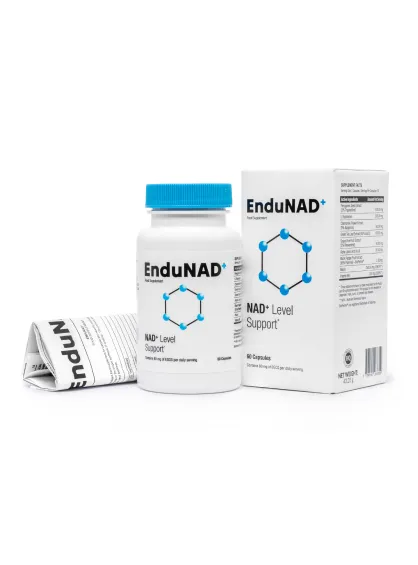
EnduNAD review
Ingredients, doses, what to realistically expect and who should skip it.
This page is general information, not medical advice. If you take medication, are pregnant or have ongoing symptoms, talk to your doctor first. These statements have not been evaluated by the Food and Drug Administration. This product is not intended to diagnose, treat, cure, or prevent any disease.