NMN vs NR: which NAD+ precursor has the better evidence?

NMN vs NR is the main fork in the road for anyone buying a NAD+ booster. Both are marketed as the “most direct” way to raise NAD+, and both have enthusiastic fans. Here is how they actually differ, based on biology and human data rather than brand claims.
How each becomes NAD+
Both feed into the salvage pathway, the body’s main NAD+ recycling route:
Niacinamide → NMN → NAD+, and separately NR → NMN → NAD+.
- NR is nicotinamide attached to a ribose sugar. Inside cells, an enzyme (NRK) adds a phosphate to turn it into NMN.
- NMN is NR plus that phosphate. It is one step from NAD+.
The twist is that NMN is a larger, charged molecule. Much of it may be converted to NR outside the cell, enter as NR, and then be turned back into NMN. A dedicated NMN transporter has been found in mice; whether it plays a meaningful role in humans is unresolved. In practice, both routes end up in the same place.
For the full picture of these names, see our B3 name decoder.
NMN vs NR at a glance
| NR (nicotinamide riboside) | NMN (nicotinamide mononucleotide) | |
|---|---|---|
| Steps to NAD+ | Two | One |
| Raises blood NAD+ in humans | Yes, consistently | Yes, in several trials |
| Human trial base | Larger, more trials | Smaller, growing |
| Typical studied dose | 250 to 1,000 mg/day | 250 to 1,200 mg/day |
| US status | Established supplement ingredient | Legal again since late 2025 |
| Flushing | No | No |
What the human trials show
NR. In a well-known 2018 trial, 1,000 mg a day for six weeks raised NAD+ in blood cells by about 60% in healthy middle-aged and older adults and was well tolerated. Other trials have looked at blood pressure, muscle, inflammation and metabolic health, with mostly small or no effects on clinical outcomes.
NMN. Several trials found NMN raises blood NAD+ and is well tolerated. In a 2021 Science study, 250 mg a day for 10 weeks improved muscle insulin sensitivity in postmenopausal women with prediabetes. Other small trials looked at walking performance, sleep and fatigue in older adults, with mixed results.
Both together. A 2025 review in Nature Metabolism summed it up: NAD+ precursors raise NAD+ in humans, but effects on health outcomes have been limited so far. There are no large head-to-head trials showing that one beats the other.
Safety and side effects
Both are well tolerated in trials lasting weeks to months, at doses up to about 1,000 mg a day. Reported side effects are mild and uncommon: nausea, bloating, diarrhea, headache, fatigue. Neither causes the niacin flush. Long-term data beyond a few months is limited for both. More in our overview of NAD supplement side effects.
Legal status and quality
NR has been sold as a US dietary supplement for years. NMN was effectively off the market between 2022 and 2025, after the FDA said it could not be a supplement, until the agency reversed course in September 2025. With the market reopened, quality varies: look for third-party testing and a certificate of analysis, especially for NMN powders.
Which one should you pick?
- Choose NR if you want the larger body of human research and an established ingredient.
- Choose NMN if you prefer the precursor closest to NAD+ and accept that its research base is smaller.
- Consider niacinamide if cost matters most. It feeds the same pathway, has a long safety record and costs a fraction of either, though it has been studied less as a “NAD booster” and high doses carry their own caveats.
Whatever you pick, judge results honestly: most people won’t feel a dramatic change, and blood NAD+ levels aren’t something you can notice.
How to tell whether a precursor is doing anything
Raising NAD+ in blood isn’t something you can feel. If you try NR or NMN, set yourself a fair test:
- Pick one product and one dose, and keep everything else stable for 8 to 12 weeks.
- Note a baseline for what you care about: energy in the afternoon, sleep, exercise recovery.
- Be honest about placebo. Many people feel better simply because they started something new.
- Stop if nothing changes. There’s no point paying for a supplement you can’t tell apart from no supplement.
Looking for specific products? See our best NAD supplement picks.
The bottom line
NMN and NR are close cousins that both raise NAD+. NR has more evidence, NMN is one step closer to NAD+, and neither has proven benefits beyond that in healthy people yet. If you’re still deciding between precursors and NAD+ itself, read NAD vs NMN, and for the niacinamide alternative, our EnduNAD review.
Frequently asked questions
Is NMN or NR better?
Neither has been proven better in head-to-head human trials. NR has more and larger human studies and a longer regulatory track record. NMN has a growing number of smaller trials. Both raise NAD+ in blood at doses around 250 to 1,000 mg a day.
Does NMN have to convert to NR first?
Possibly. Research suggests NMN is often converted to NR outside cells before it enters, then turned back into NMN inside. A specific NMN transporter has been described in mice, but whether it matters in humans is still debated.
Which is cheaper, NMN or NR?
Prices change, but NR is often the more expensive of the two because of patent-protected branded sources. Niacinamide, the precursor at the start of the same pathway, costs a fraction of either.
Can you take NMN and NR together?
Some people do, but there is no evidence that combining them works better than an adequate dose of one. Taking both mainly increases cost and your total B3 load.
Are NMN and NR safe?
In human trials lasting weeks to a few months, both were well tolerated at up to about 1,000 mg a day, with mild side effects such as nausea, bloating and headache. Long-term safety data is still limited.
Sources
- Martens et al. (2018). Chronic nicotinamide riboside supplementation is well-tolerated and elevates NAD+ in healthy middle-aged and older adults. Nature Communications.
- Yoshino et al. (2021). Nicotinamide mononucleotide increases muscle insulin sensitivity in prediabetic women. Science.
- Vinten et al. (2025). NAD+ precursor supplementation in human ageing: clinical evidence and challenges. Nature Metabolism.
- Policy Canary: NMN FDA regulatory status
Read next

Best NAD supplement in 2026: honest picks by goal (and the label problem most lists ignore)
The best NAD supplement depends on your goal and budget. Honest picks for NR, combination and niacinamide formulas, plus why most NAD+ labels fail lab tests.

EGCG benefits: what green tea's key compound can and can't do
EGCG benefits explained: what green tea's main catechin does for metabolism, heart and cells, what the evidence shows, and the 800 mg liver safety threshold.

L-tryptophan benefits: sleep, mood and NAD+, plus the safety history you should know
L-tryptophan benefits for sleep, mood and NAD+ production, what the evidence shows, food sources, doses, the 1989 EMS outbreak and drug interactions.
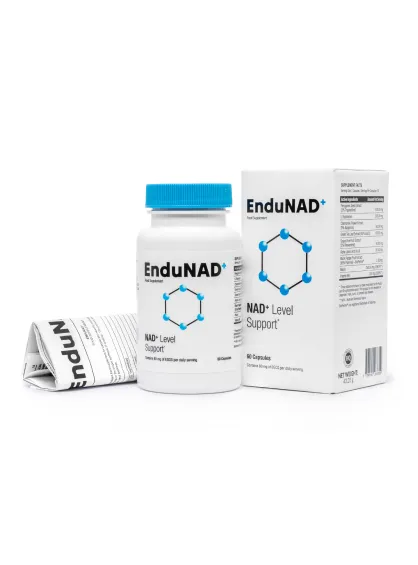
EnduNAD review
Ingredients, doses, what to realistically expect and who should skip it.
This page is general information, not medical advice. If you take medication, are pregnant or have ongoing symptoms, talk to your doctor first. These statements have not been evaluated by the Food and Drug Administration. This product is not intended to diagnose, treat, cure, or prevent any disease.