NAD vs NMN: what's the difference, and which one actually raises NAD+?

NAD vs NMN is one of the most common comparisons in the longevity supplement aisle, and the marketing makes it confusing. Some brands sell “pure NAD+”, others say NMN is the smarter route, and IV clinics argue that only a drip gets NAD+ where it needs to go. Here is what the biology and the human research actually show.
The relationship in one line
Niacinamide → NMN → NAD+. NMN sits one enzyme away from NAD+ in the body’s main recycling pathway (the salvage pathway). Nicotinamide riboside (NR) sits one step before NMN. So NMN is not a rival to NAD+; it is raw material for it. For the bigger picture, see what NAD+ is.
NAD vs NMN at a glance
| NAD+ (oral) | NMN | |
|---|---|---|
| What it is | The active coenzyme | Direct precursor of NAD+ |
| Fate when swallowed | Largely broken down in the gut into smaller precursors | Absorbed; may be converted to NR before entering cells |
| Human trials on raising NAD+ | Very few | Several, generally positive for blood NAD+ |
| Typical dose | 100 to 500 mg | 250 to 1,000 mg |
| US legal status | Sold as a supplement | Legal again as a supplement since late 2025 |
| Price per month | Varies widely | Moderate to high |
Why swallowing NAD+ doesn’t work well
NAD+ is a relatively large, fragile molecule. In the gut, enzymes cut it down into smaller pieces such as NMN, NR and nicotinamide, and those pieces are what get absorbed. So an oral NAD+ capsule largely ends up acting like a mix of precursors, at a higher price.
“Liposomal” and sublingual NAD+ products claim to get around this, but there is little to no published human data showing they raise NAD+ more than plain precursors. Even IV NAD+ is less direct than it sounds: in a small pilot study, slowly infused NAD+ was rapidly cleared from the blood for the first two hours. We compare delivery methods in our guide to NAD+ pills vs injections.
What the NMN research shows
Several small human trials found that NMN, at doses of roughly 250 to 1,200 mg a day, raises NAD+ levels in blood and is well tolerated over weeks to months. The best-known result: in a 2021 study in Science, 250 mg a day for 10 weeks improved muscle insulin sensitivity in postmenopausal women with prediabetes.
That is promising, but limited. A 2025 review in Nature Metabolism concluded that NAD+ precursors so far show limited effects on health outcomes in humans, and that larger, longer trials are needed. Claims that NMN reverses aging are not supported by human evidence.
NMN’s legal status in the US
NMN had a rocky few years. In 2022, the FDA said NMN could not be sold as a dietary supplement because it was being investigated as a drug. After industry petitions and a lawsuit, the FDA reversed that position in September 2025 and formally reinstated NMN’s new dietary ingredient status in December 2025. NMN is now legal to sell as a supplement, which does not mean the FDA has approved it or evaluated whether it works.
Safety
Both NMN and oral NAD+ have been well tolerated in short trials. Reported side effects are mild: nausea, bloating, headache, fatigue. Long-term data is limited. See our full overview of NAD supplement side effects.
So which should you choose?
- If you want the most evidence for raising NAD+: NMN or NR, not oral NAD+.
- If budget matters or you want a long safety record: niacinamide, the precursor at the start of the same pathway. It is cheap, doesn’t flush and has decades of use behind it, though it has been studied less as a “NAD booster”.
- Skip oral NAD+ unless a product shows human data for its specific delivery form.
How to read an NMN or NAD+ label
Before buying either, check four things on the label:
- The milligrams per daily serving, not per capsule. Many products need two or more capsules to reach studied doses.
- The exact form. “NAD+ complex” or “NAD+ support blend” may contain mostly niacinamide or other ingredients. A good label lists each ingredient and its dose.
- Third-party testing. NMN quality varies, especially since the market reopened. Look for a certificate of analysis from an independent lab.
- The claims. Structure and function statements are allowed; “reverses aging” or “repairs DNA” are red flags.
Looking for specific products? See our best NAD supplement picks.
The bottom line
NAD+ is the goal; NMN is one of several ways to get there. Swallowing NAD+ itself is the least efficient option. If you’re comparing precursors, our NMN vs NR guide covers the two best-studied ones, and our EnduNAD review explains the niacinamide-based alternative.
Frequently asked questions
Is NMN better than NAD+?
For oral supplements, NMN has more human evidence than NAD+ itself. Swallowed NAD+ is largely broken down in the gut into smaller precursors before absorption, while NMN has been shown in several human trials to raise NAD+ levels in blood.
Does NMN turn into NAD+?
Yes. NMN is one enzymatic step away from NAD+. Inside cells, an enzyme called NMNAT combines NMN with ATP to make NAD+. How NMN gets into cells is still debated: it may enter directly or first be converted to nicotinamide riboside.
Is NMN legal in the US?
Yes. The FDA reversed its 2022 exclusion in September 2025 and confirmed that NMN may be sold as a dietary supplement. Legal does not mean FDA approved or proven to work.
Can I take NAD+ and NMN together?
You can, but there is little reason to. If NMN already raises NAD+, adding oral NAD+ mostly adds cost. Combining several NAD+ precursors also raises your total B3 intake, so check the combined dose with your doctor.
What is a cheaper alternative to NMN?
Niacinamide (nicotinamide) is the cheapest NAD+ precursor and is used by the body's main recycling pathway for NAD+. It has a long safety record and doesn't flush, though it has been studied less specifically as a NAD+ booster than NMN or NR.
Sources
- Yoshino et al. (2021). Nicotinamide mononucleotide increases muscle insulin sensitivity in prediabetic women. Science.
- Vinten et al. (2025). NAD+ precursor supplementation in human ageing: clinical evidence and challenges. Nature Metabolism.
- Grant et al. (2019). Changes in the human plasma and urine NAD+ metabolome during a 6 hour intravenous infusion of NAD+. Frontiers in Aging Neuroscience.
- NutraIngredients (2025). FDA reinstates NDI status of NMN with new letters to ingredient players.
- Policy Canary: NMN FDA regulatory status
Read next
Best NAD supplement in 2026: honest picks by goal (and the label problem most lists ignore)
The best NAD supplement depends on your goal and budget. Honest picks for NR, combination and niacinamide formulas, plus why most NAD+ labels fail lab tests.

EGCG benefits: what green tea's key compound can and can't do
EGCG benefits explained: what green tea's main catechin does for metabolism, heart and cells, what the evidence shows, and the 800 mg liver safety threshold.

L-tryptophan benefits: sleep, mood and NAD+, plus the safety history you should know
L-tryptophan benefits for sleep, mood and NAD+ production, what the evidence shows, food sources, doses, the 1989 EMS outbreak and drug interactions.
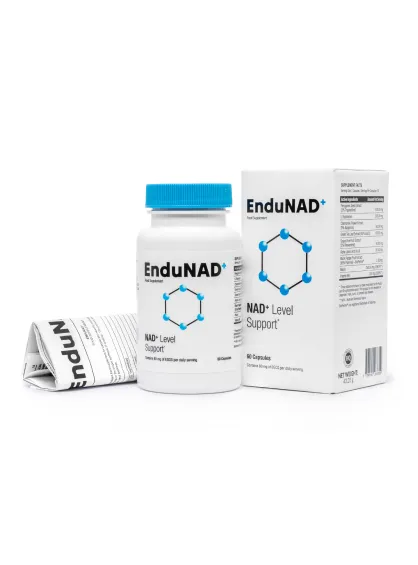
EnduNAD review
Ingredients, doses, what to realistically expect and who should skip it.
This page is general information, not medical advice. If you take medication, are pregnant or have ongoing symptoms, talk to your doctor first. These statements have not been evaluated by the Food and Drug Administration. This product is not intended to diagnose, treat, cure, or prevent any disease.