Niacin benefits: what vitamin B3 really does for you (and what it doesn't)
Search for niacin benefits and you’ll find long lists: more energy, better heart health, sharper brain, clearer skin. Some of these are solid, some are outdated, and some come from studies on a different form of vitamin B3. Here is what niacin actually does, graded by evidence.
What niacin does in your body
Niacin is vitamin B3. Your body converts it into two coenzymes, NAD+ and NADP+, which more than 400 enzymes depend on. They are involved in:
- Energy metabolism: turning carbohydrates, fats and proteins into usable energy
- DNA repair and cell signaling, through enzymes that consume NAD+
- Making and breaking down fats and cholesterol
- Antioxidant defenses, through NADPH
Because almost every cell relies on these coenzymes, niacin is essential. Severe deficiency causes pellagra, with the “4 Ds”: dermatitis, diarrhea, dementia and, untreated, death. Pellagra is rare in the US today, largely because flour and cereals are fortified with niacin. For more on the coenzyme, see what NAD+ is.
Niacin benefits graded by evidence
| Benefit | Evidence | Verdict |
|---|---|---|
| Supports normal energy metabolism | Established nutrient function | Proven* |
| Supports normal nervous system function | Established nutrient function | Proven* |
| Supports healthy skin | Established; deficiency causes dermatitis | Proven* |
| Prevents and treats pellagra | Established | Proven |
| Raises HDL, lowers LDL and triglycerides (high doses) | Many trials | Proven, but… |
| Prevents heart attacks on top of statins | Large trials found no benefit | Not supported |
| Lowers new non-melanoma skin cancers (nicotinamide, high-risk people) | One large trial | Promising, specific group |
| Raises NAD+ levels | Established biochemistry | Proven |
| More energy if you already get enough | Little evidence | Unproven |
| Better memory, brain protection, joint pain | Small or early studies | Unproven |
*Normal function in people who get enough niacin. Extra niacin doesn’t boost these beyond normal.
Niacin and cholesterol: the big caveat
For decades, high-dose niacin (1 to 3 grams a day, usually prescription extended-release nicotinic acid) was used to raise HDL (“good”) cholesterol and lower LDL and triglycerides. It does change those numbers.
But two large trials changed practice. In AIM-HIGH (2011) and HPS2-THRIVE (2014), adding niacin to statins in people with heart disease did not reduce heart attacks or strokes, and HPS2-THRIVE found more serious side effects, including bleeding, infections and new diabetes. A 2024 study in Nature Medicine offered a possible explanation: 4PY, a breakdown product of excess niacin, was linked to blood vessel inflammation and higher cardiovascular risk.
Today, niacin is rarely used for cholesterol. If you were prescribed it, follow your doctor’s advice; don’t self-treat cholesterol with over-the-counter niacin.
Niacin, skin and nicotinamide
Some niacin benefits really belong to nicotinamide (niacinamide), the other form of B3:
- In the ONTRAC trial, 500 mg nicotinamide twice a day reduced new non-melanoma skin cancers by 23% in people who had had several before.
- Topical niacinamide is a well-studied skincare ingredient for oil control, redness and the skin barrier.
Niacinamide doesn’t flush and doesn’t affect cholesterol. For how the two forms differ, read niacinamide vs niacin.
How much niacin do you need?
| Group | Daily need |
|---|---|
| Adult men | 16 mg |
| Adult women | 14 mg |
| Pregnancy | 18 mg |
| Breastfeeding | 17 mg |
| Upper limit (supplements, adults) | 35 mg |
Your body can also make some niacin from the amino acid tryptophan in protein, roughly 1 mg from every 60 mg of tryptophan.
Best food sources of niacin
Approximate amounts per typical serving:
| Food | Serving | Niacin (approx.) |
|---|---|---|
| Beef liver | 3 oz | 15 mg |
| Chicken breast | 3 oz | 10 mg |
| Turkey breast | 3 oz | 10 mg |
| Tuna, canned light | 3 oz | 9 mg |
| Salmon | 3 oz | 8.5 mg |
| Brown rice, cooked | 1 cup | 5 mg |
| Peanuts, dry roasted | 1 oz | 4 mg |
| Fortified breakfast cereal | 1 serving | Varies, often 5 to 20 mg |
A normal diet with some meat, fish, poultry or fortified grains easily covers your needs. Vegans can get enough from peanuts, legumes, whole grains, mushrooms and fortified foods.
Do you need a niacin supplement?
Most people don’t, for basic needs. A supplement can make sense if:
- your diet is very limited, or you drink alcohol heavily (alcohol depletes B vitamins)
- you have a condition affecting absorption, and your doctor recommends it
- you want B3 specifically for NAD+ support, in which case flush-free niacinamide is the usual choice
High-dose nicotinic acid should only be taken under medical supervision. Before you start, read our guide to niacin side effects.
The bottom line
Niacin’s proven benefits are the basics: energy metabolism, nerves, skin and NAD+, all covered by a normal diet. High-dose niacin for cholesterol is largely a thing of the past. If you take B3 as a supplement, choose the form that fits your goal and stay mindful of the dose. Wondering about flushing? See niacin flush.
*These statements have not been evaluated by the Food and Drug Administration. This product is not intended to diagnose, treat, cure, or prevent any disease.
Frequently asked questions
What are the main benefits of niacin?
Niacin (vitamin B3) is essential for turning food into energy, for a healthy nervous system and skin, and for making NAD+, a coenzyme every cell needs. It prevents pellagra, the disease caused by severe deficiency. At high doses it also changes cholesterol levels, but that no longer translates into fewer heart attacks.
Is niacin good for your heart?
High-dose niacin raises HDL and lowers LDL cholesterol and triglycerides, but large trials found that adding it to statins did not reduce heart attacks or strokes and caused more side effects. A 2024 study also linked a breakdown product of excess niacin to higher cardiovascular risk. Don't take high-dose niacin for your heart without your doctor.
Does niacin give you energy?
Niacin supports normal energy metabolism, because your body uses it to make NAD+ and NADH, which turn food into usable energy. If you already get enough niacin from food, which most Americans do, extra niacin is unlikely to make you feel more energetic.
How much niacin do you need per day?
Adult men need about 16 mg and women about 14 mg a day, a little more during pregnancy and breastfeeding. A chicken breast alone provides around 10 mg. The upper limit for supplemental niacin is 35 mg a day.
What is the best form of niacin to take?
It depends on the goal. For general B3 and NAD+ support, niacinamide is the easiest because it doesn't flush. Nicotinic acid is the form used for cholesterol, but only under medical supervision. Inositol hexanicotinate, sold as no-flush niacin, delivers little active niacin.
Sources
- NIH Office of Dietary Supplements: Niacin fact sheet for health professionals
- AIM-HIGH Investigators (2011). Niacin in patients with low HDL cholesterol levels receiving intensive statin therapy. NEJM.
- HPS2-THRIVE Collaborative Group (2014). Effects of extended-release niacin with laropiprant in high-risk patients. NEJM.
- Chen et al. (2015). A phase 3 randomized trial of nicotinamide for skin-cancer chemoprevention (ONTRAC). NEJM.
- Ferrell et al. (2024). A terminal metabolite of niacin promotes vascular inflammation and contributes to cardiovascular disease risk. Nature Medicine.
Read next

Niacin side effects: what happens at each dose, which organ is at risk, and who should avoid it
Niacin side effects range from harmless flushing to liver damage. What happens if you take niacin every day, which organ it affects, and who should avoid it.
Best NAD supplement in 2026: honest picks by goal (and the label problem most lists ignore)
The best NAD supplement depends on your goal and budget. Honest picks for NR, combination and niacinamide formulas, plus why most NAD+ labels fail lab tests.

EGCG benefits: what green tea's key compound can and can't do
EGCG benefits explained: what green tea's main catechin does for metabolism, heart and cells, what the evidence shows, and the 800 mg liver safety threshold.
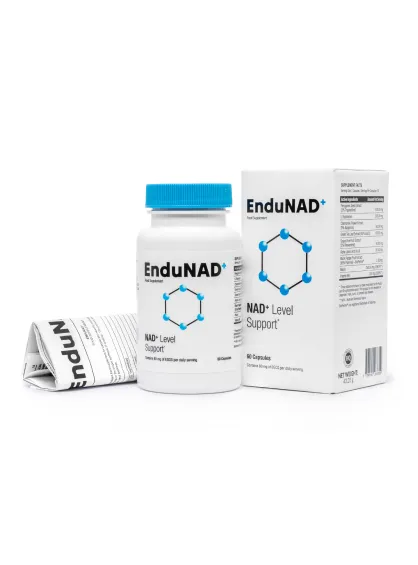
EnduNAD review
Ingredients, doses, what to realistically expect and who should skip it.
This page is general information, not medical advice. If you take medication, are pregnant or have ongoing symptoms, talk to your doctor first. These statements have not been evaluated by the Food and Drug Administration. This product is not intended to diagnose, treat, cure, or prevent any disease.