Niacin flush: why it happens, how long it lasts, and how to prevent it

If you took a B3 or “energy” supplement and your face suddenly turned red and hot, you probably had a niacin flush. It can feel alarming the first time, but for most people it is harmless and passes quickly. Here is what is going on, when to take it seriously, and how to avoid it.
What a niacin flush feels like
Typical signs:
- Redness of the face, ears, neck and upper chest, sometimes the arms
- A feeling of heat, as if you are blushing hard
- Itching, prickling or tingling
- Sometimes mild lightheadedness
It usually starts 15 to 30 minutes after taking immediate-release niacin and is gone within about an hour. The first doses tend to cause the strongest flush; many people find it weakens after a week or two of daily use as the body adapts.
Why niacin makes you flush
Niacin (nicotinic acid) switches on a receptor called GPR109A on immune cells in your skin. That triggers the release of prostaglandins, signaling molecules that widen small blood vessels close to the skin surface. More blood flowing near the surface means redness and heat.
It is not an allergic reaction and it is not “toxins leaving the body”, a claim you will see on social media. It is simply blood vessels widening.
Niacinamide, the other main form of vitamin B3, does not activate this receptor, so it does not cause a flush. The difference is explained in our niacinamide vs niacin guide.
How much niacin causes a flush?
Flushing can start at doses of about 30 to 50 mg of nicotinic acid, especially on an empty stomach. That is low: many B-complex and “energy” supplements contain 50 to 100 mg. It is also why the US upper limit for supplemental niacin is set at 35 mg a day for adults.
| Form of B3 | Flush? |
|---|---|
| Niacin / nicotinic acid, immediate-release | Yes, strongest |
| Niacin, extended- or sustained-release | Milder, but higher liver risk |
| Inositol hexanicotinate (“no-flush niacin”) | Little to none |
| Niacinamide / nicotinamide | No |
| Nicotinamide riboside (NR), NMN | No |
Is a niacin flush dangerous?
For most people, no. But call a doctor or seek urgent care if a flush comes with:
- Dizziness or fainting
- A racing or irregular heartbeat
- Shortness of breath or chest pain
- Swelling of the lips, face or throat, or hives (signs of a true allergic reaction)
Also talk to your doctor if you flush regularly and take blood pressure medication, because niacin can add to their effect and drop your blood pressure further.
6 ways to prevent a niacin flush
- Switch to niacinamide if you take B3 for general health or NAD+ support. It doesn’t flush.
- Take niacin with food, ideally a low-fat snack, rather than on an empty stomach.
- Start low and build up slowly, for example 50 mg a day for a week, then increase under your doctor’s guidance.
- Avoid hot drinks, spicy food and alcohol around your dose; they make flushing worse.
- Ask your doctor about aspirin taken about 30 minutes before niacin. It blocks the prostaglandins that cause the flush, but it is not right for everyone.
- Be careful with extended-release niacin. It flushes less, but it is linked to a higher risk of liver damage at high doses. Only use it under medical supervision.
What about “no-flush niacin”?
Products labeled “no-flush” or “flush-free” niacin usually contain inositol hexanicotinate. It doesn’t flush because the body releases very little free nicotinic acid from it. That also means you get little of niacin’s effect on cholesterol, so it is not a substitute for prescription niacin. If you want flush-free vitamin B3 for NAD+ support, niacinamide is the simpler choice.
Who should avoid high-dose niacin altogether
Flushing is the visible side effect, but some people should avoid niacin doses above normal dietary amounts entirely, unless their doctor prescribes it:
- People with liver disease or raised liver enzymes
- People with active stomach ulcers
- People with gout, because niacin raises uric acid
- People with diabetes, because niacin can raise blood sugar
- People on statins or blood pressure medication, without medical supervision
If you’re in one of these groups and want B3 for NAD+ support, ask your doctor whether a moderate niacinamide dose is suitable instead.
Niacin flush and NAD+ supplements
Many NAD+ boosters contain a form of vitamin B3, because your body uses it to build NAD+. Whether a product flushes depends entirely on which form it uses. Check the Supplement Facts panel: “Niacin (as niacinamide)” will not flush; “Niacin” without a form, or “as nicotinic acid”, may. For the bigger picture, see what NAD+ is and our overview of NAD supplement side effects.
Frequently asked questions
What is a niacin flush?
A niacin flush is temporary redness, warmth, itching or tingling of the skin, mostly on the face, neck and chest, after taking niacin (nicotinic acid). It happens because niacin widens small blood vessels near the skin surface. It is uncomfortable but usually harmless.
How long does a niacin flush last?
A flush typically starts 15 to 30 minutes after taking immediate-release niacin and fades within about an hour. With extended-release niacin it can start later and be milder but last longer.
Is a niacin flush good for you?
No. Despite claims online, the flush is not a sign of detox or that the niacin is working. It is a side effect of blood vessels widening. The flush itself is harmless for most people, but it has no health benefit.
How much niacin causes a flush?
Flushing can start at about 30 to 50 mg of nicotinic acid, especially on an empty stomach. That is why the US upper limit for supplemental niacin is 35 mg a day for adults. Niacinamide does not cause a flush at any normal dose.
Does aspirin stop a niacin flush?
Taking aspirin about 30 minutes before niacin can reduce flushing, because aspirin blocks the prostaglandins that cause it. Only do this with your doctor's approval, especially if you take blood thinners or have stomach problems.
Sources
Read next
Best NAD supplement in 2026: honest picks by goal (and the label problem most lists ignore)
The best NAD supplement depends on your goal and budget. Honest picks for NR, combination and niacinamide formulas, plus why most NAD+ labels fail lab tests.

EGCG benefits: what green tea's key compound can and can't do
EGCG benefits explained: what green tea's main catechin does for metabolism, heart and cells, what the evidence shows, and the 800 mg liver safety threshold.

L-tryptophan benefits: sleep, mood and NAD+, plus the safety history you should know
L-tryptophan benefits for sleep, mood and NAD+ production, what the evidence shows, food sources, doses, the 1989 EMS outbreak and drug interactions.
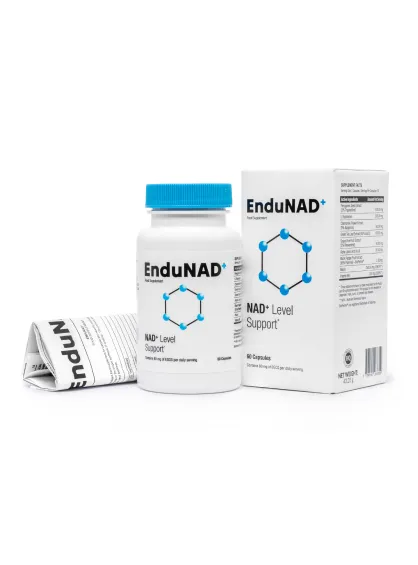
EnduNAD review
Ingredients, doses, what to realistically expect and who should skip it.
This page is general information, not medical advice. If you take medication, are pregnant or have ongoing symptoms, talk to your doctor first. These statements have not been evaluated by the Food and Drug Administration. This product is not intended to diagnose, treat, cure, or prevent any disease.